The Boost Blueprint: Turbos vs. Superchargers vs. Prochargers vs. Hybrid Assist
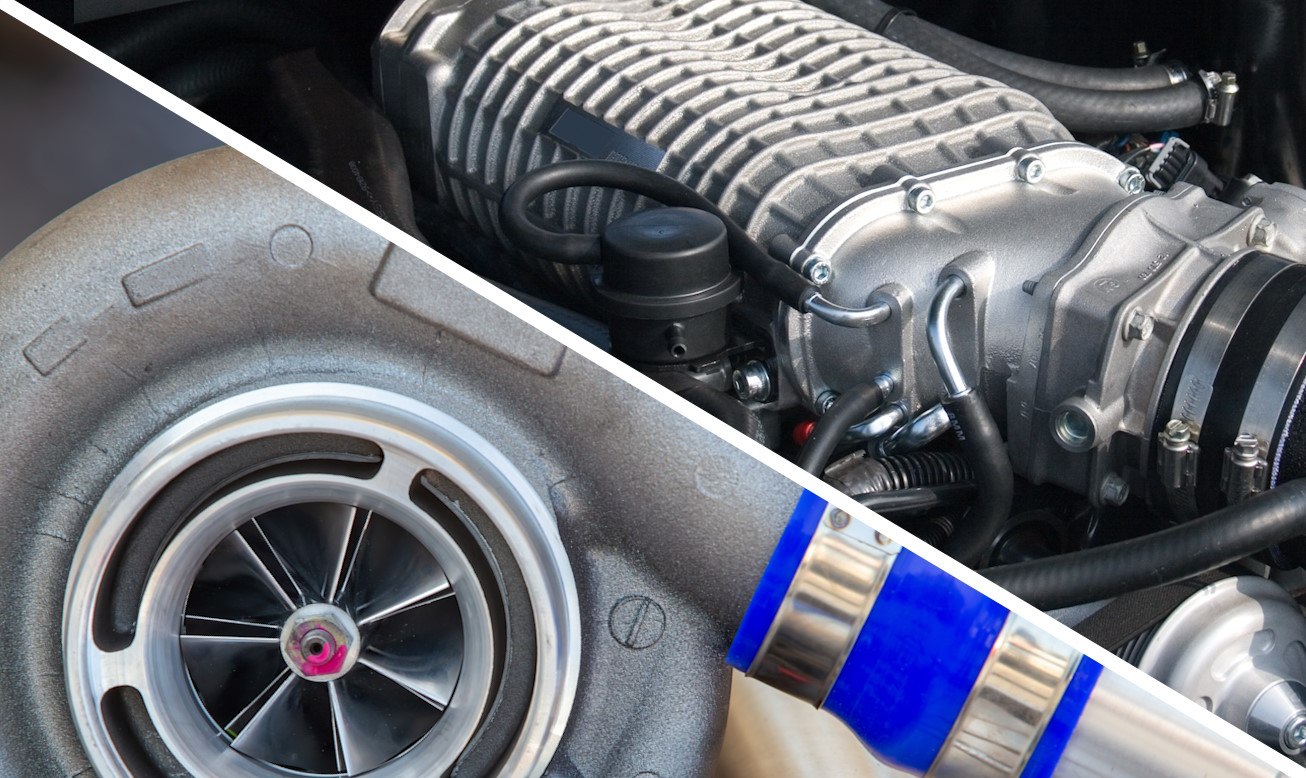
Image supplied by TRACKSET.
At its absolute core, an internal combustion engine is nothing more than a giant air pump. The more air and oxygen you can cram into a cylinder, the more fuel you can burn, and the more power you can send to the rear wheels.
For decades, if you wanted to make a car fast, you had two traditional choices for forcing air into an engine: Turbochargers or Roots-style Superchargers.
But as engineering has advanced into the mid-2020s, the power war has become highly sophisticated. Now, the streets are filled with Prochargers (centrifugal superchargers) that mix the best of both worlds, and cutting-edge Hybrid Assist systems that use instantaneous electric torque to fill in mechanical gaps.
To figure out which system belongs under your hood, we have to tear down the physics, expose the parasitic losses, and look at the raw mechanics of modern boost.
Part 1: The Four Factions of Forced Induction
1. The Scavenger: The Turbocharger
• How it works: A turbocharger utilizes "free" energy. It features two wheels connected by a solid shaft. Hot, expanding exhaust gas exits the engine and spins the turbine wheel. As that wheel spins, it spins the compressor wheel on the other side, which sucks in fresh air, compresses it, and forces it into the engine.
• The Performance Profile: Because a turbo relies on exhaust gas volume, it suffers from turbo lag—the brief delay it takes for the engine to build enough RPMs to generate the gas required to spin the turbine. But once it hits its stride? The power delivery is a violent surge that hits like a freight train, offering incredible top-end performance.
2. The Brute: The Traditional Supercharger (Roots/Screw Style)
• How it works: Unlike a turbo, a traditional supercharger sits directly on top of the engine intake manifold and is physically connected to the engine’s crankshaft via a rubber accessory belt. As the engine turns, it spins internal rotors that immediately pack compressed air straight into the cylinders.
• The Performance Profile: Instantaneous, neck-snapping torque. There is zero lag because the blower spins at the exact same frequency as your right foot moves the pedal. The downside is parasitic loss. It takes a massive amount of mechanical power just to turn a large supercharger; a top-fuel dragster blower can consume up to 900 horsepower just to run itself.
3. The Hybrid Mechanical: The Procharger (Centrifugal Supercharger)
• How it works: A Procharger is a fascinating mechanical mutation. It uses a belt driven by the crankshaft (like a supercharger) but features an internal gear casing that spins a centrifugal compressor wheel (shaped exactly like the front half of a turbocharger).
• The Performance Profile: A Procharger does not give you instant, low-end torque like a traditional supercharger, nor does it suffer from the sudden lag-surge of a turbo. Instead, the boost builds linearly with engine RPM. The faster you spin the engine, the more air it crams in. It delivers a hyper-predictable, escalating power curve that feels like a giant, naturally aspirated engine on steroids. It is highly favored by drag racers because it doesn't instantly spin the rear tires into smoke off the starting line.
4. The Volt Weapon: High-Voltage Hybrid Assist
• How it works: The modern performance ultimate cheat code. This system abandons air compression entirely. An electric motor is sandwiched directly between the engine’s flywheel and the transmission, or mounted directly to the axles.
• The Performance Profile: Electric motors generate 100% of their maximum torque at 0 RPM. Hybrid assist systems (like those found in modern sports cars and hypercars) use electricity to "torque fill." The instant you step on the gas, the electric motor gives you a massive jolt of power while your mechanical turbocharger takes its time winding up to build boost. Once the turbo is fully loaded, the electric motor steps back and lets the combustion engine take over. It completely erases turbo lag from existence.
Part 2: The Boost Breakdown
Metric |
The Turbocharger |
Traditional Supercharger |
Centrifugal (Procharger) |
Hybrid Assist |
|---|---|---|---|---|
Throttle Response |
Medium (Suffers from lag) |
Instant (Zero lag) |
Linear (Builds with RPM) |
Instantaneous (0 RPM) |
Parasitic Power Loss |
Extremely Low |
High |
Medium |
None (Generates power) |
Installation Complexity |
High (Complex exhaust/piping) |
Medium (Sits on intake) |
Compact/Simple |
Extreme (High voltage tech) |
Exhaust Sound Vibe |
Muffled, high-pitched spool |
Heavy mechanical whine |
Jet-engine whistle at idle |
Silent electric whine |
The Verdict: Choose Your Power Delivery
The choice between these four systems isn’t a question of which one makes the most power—they can all be modified to produce terrifying horsepower numbers. It is entirely a question of character and deployment.
• Choose the Traditional Supercharger if you live for immediate, tire-shredding muscle-car theater and want instant throttle response the millisecond your foot moves.
• Choose the Procharger if you want a linear, controllable power curve that protects traction and sings a distinct, jet-engine-like gear whistle at idle.
• Choose the Turbocharger if you want massive top-end speed, efficient power extraction from smaller displacement engines, and the iconic acoustic sound of a wastegate dumping pressure.
• Choose the Hybrid Assist if you want to look directly into the high-tech future of performance, combining the relentless, wall-of-torque power of electricity with the visceral roar of internal combustion.


COMMENTS