
The Kaizen Crucible: How Toyota Built the Unstoppable Capital of Quality
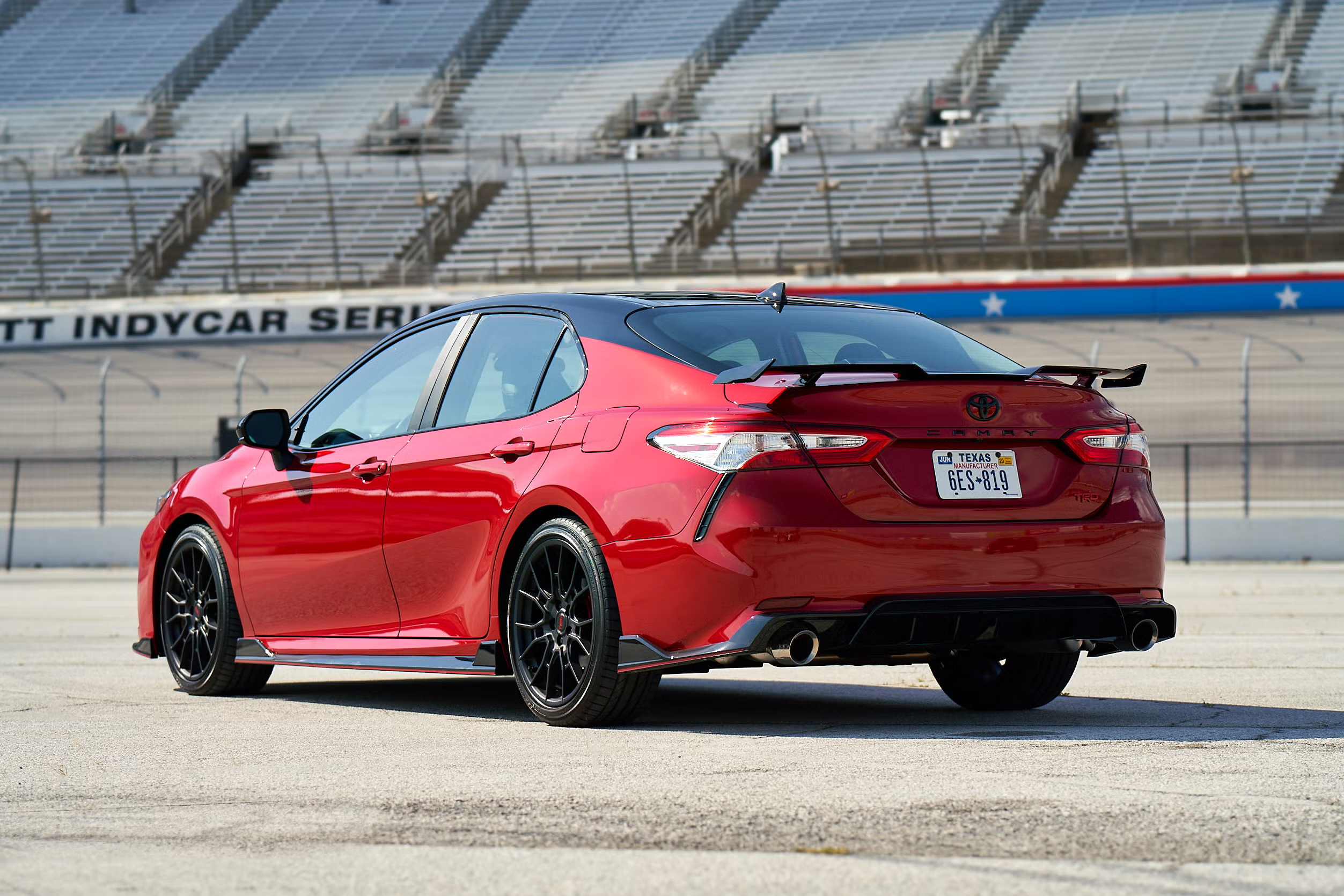
Image supplied by TRACKSET.
If you pop the hood of a modern Toyota Hilux, a Camry, or a Land Cruiser somewhere in the world today, you are looking at a mechanical ecosystem designed specifically to outlast the human being driving it. There are no flashy, unproven electronics cluttering the core drivetrain, no fragile materials holding back the suspension, and no complex engineering shortcuts meant to save a few pennies on the assembly line.
While the rest of the global automotive industry spent the 20th century chasing flash-in-the-pan styling trends, quarterly corporate hype cycles, and cutting-edge but notoriously unreliable technologies, Toyota focused on a far more radical mission: the absolute erasure of human and mechanical error.
By treating the factory floor not as a place of rigid top-down commands, but as a living laboratory where every worker had the power to halt production to fix a flaw, the brand from Aichi, Japan, grew from a humble textile loom manufacturer into the single largest vehicle manufacturer on planet Earth. This is the story of how Toyota built an absolute fortress of quality that conquered the world.
Part 1: The Loom, the Loom-Break, and the TPS Revolution (1937–1960s)
Toyota’s story doesn't begin with a race car or a sleek sedan; it begins with the automated weaving of fabric. In the early 1920s, a brilliant Japanese inventor named Sakichi Toyoda built an automatic loom that would instantly shut itself down if a single thread snapped, preventing flawed cloth from being wasted.
When his visionary son, Kiichiro Toyoda, used the money from selling the loom patents to officially launch the Toyota Motor Corporation in 1937, he carried that exact philosophical blueprint with him.
Following the total destruction of World War II, the young company was strapped for cash and resources. They couldn't afford to copy the massive, wasteful overproduction methods of Detroit. To survive, an engineering legend named Taiichi Ohno developed the revolutionary Toyota Production System (TPS), built around two core pillars:
• Jidoka (Automation with a Human Touch): If a single factory worker spotted a flaw on the assembly line, they pulled a physical rope called the Andon Cord. The entire multi-mile assembly line came to an immediate, grinding halt until the problem was investigated and permanently engineered out of existence.
• Just-In-Time Manufacturing: Instead of stockpiling massive warehouses full of random car components, parts were manufactured and delivered to the assembly line only at the exact moment they were needed, stripping out corporate waste and maximizing efficiency.
This continuous, relentless pursuit of incremental improvement—known globally as Kaizen (Change for the Better)—completely transformed the manufacturing world. While Detroit assembly lines buried their flaws to keep production quotas moving, Toyota paused its lines to achieve perfection.
Part 2: The Armor Plating and the Million-Mile Legends (1960s–1990s)
By the 1970s and 1980s, the global fuel crises sent shocked American consumers fleeing out of heavy, gas-guzzling V8s. When they stepped inside Toyota dealerships to check out the fuel-efficient Corolla, they discovered a shocking truth: these affordable Japanese cars didn't just save gas—they simply refused to die.
Toyota built an absolute empire around three legendary vehicles that became the universal definitions of bulletproof endurance:
1. The Hilux (The Invincible Truck)
The Toyota Hilux is globally recognized by the car community as the closest thing to mechanical immortality ever forged by human hands. Famously tested by media programs like Top Gear, a standard Hilux was drowned in an ocean tide, crashed through buildings, hit with a wrecking ball, and placed on top of a demolished skyscraper explosive drop—only to fire back up every single time with basic hand tools. It became the definitive global choice for park rangers, farmers, and military forces operating in the most unforgiving environments on Earth.
2. The Land Cruiser (The Off-Road Monarch)
If you want to go to the Australian Outback, the deep Amazon rainforest, or the deserts of the Middle East, you take a Toyota Land Cruiser. Models like the FJ40, the heavy-duty 70-Series, and the luxury 80-Series were built to an entirely separate, heavy-duty durability standard than standard passenger cars. They became the ultimate global symbol of overland freedom, designed with the specific engineering mandate to get you into the wilderness—and safely back out again.
3. The 2JZ Engine (The Tuner King)
Toyota wasn't just about utility; they possessed a terrifying engineering peak that left the sports car world completely shell-shocked. In 1993, they dropped the fourth-generation Toyota Supra (A80) packing a twin-turbocharged inline-six code-named the 2JZ-GTE.
Because Toyota had over-engineered the iron engine block to survive extreme factory durability tests, performance tuners quickly realized they could pump massive amounts of boost through the stock internal components. The 2JZ became a legendary deity of the tuner community, capable of cranking out 800 to 1,000+ horsepower without ever cracking the engine block open.
Part 3: The Prius Pioneer and the Gazoo Racing Renaissance (2000s–Present)
As the automotive industry crossed into the 21st century, Toyota pulled off the ultimate corporate plot twist. In 1997, they launched the Toyota Prius, the world's first mass-produced hybrid electric vehicle. While performance purists mocked its slow acceleration and aerodynamic shape, the Prius was a technological tour de force. It proved that Toyota could master high-voltage battery management and electric-gas integration decades before the rest of Detroit or Europe even started drawing sketches.
But Toyota’s current era is defined by a massive cultural renaissance led by their charismatic, car-loving former CEO and current Chairman, Akio Toyoda (who races undercover under the pseudonym "Morizo"). Akio famously looked at his corporate boardrooms and declared, "No more boring cars."
Under his direct guidance, the brand unleashed Gazoo Racing (GR)—their elite, in-house motorsport weapon. They gave the car community pure, unadulterated track monsters like the GR Supra, the mid-engine GR86, and the rally-bred, all-wheel-drive GR Corolla.
Simultaneously, Toyota built a massive defensive wall around its legendary reliability by pioneering advanced, hydrogen-fueled technology and massive multi-pathway hybrid setups, proving that internal combustion and future-focused efficiency could happily live under the same hood.
The Verdict: The Absolute Capital of Trust
The history of Toyota is the history of earned, unshakeable trust. Ford built transit for the masses, GM built a ladder of luxury, BMW engineered the sharpest handling, and Porsche perfected sports car purity—but Toyota built the absolute benchmark of human dependability. They proved that true automotive luxury isn't a collection of fleeting digital gadgets, a pretentious badge, or a fragile layer of chrome; it is the absolute, quiet confidence that when you turn the mechanical key in the ignition, the machine will respond without hesitation, every single time, until the end of the world.
The original automatic textile looms of Sakichi Toyoda are safely housed in museums, but the blueprint stamped onto the world's highways remains indestructible. Every time an old Land Cruiser tackles a rock face in a mountain storm, every time a commuter car hits a half-million miles on its original transmission, and every time a GR engine screams past a racetrack apex—the relentless, uncompromising legacy of the Kaizen crucible commands the road.


COMMENTS