
The Straight-Six Renaissance: Why the Inline-Six Engine is Making a Massive Comeback

Photo: RocketJohn · CC BY-SA 4.0 · Cropped
For decades, the automotive engineering world was locked in a brutal game of spatial math. As safety regulations got stricter and front crumple zones grew larger, car companies systematically began killing off one of the greatest engine configurations ever created: the naturally balanced, silky-smooth Inline-Six (I6).
Apart from die-hard holdouts like BMW, almost every major manufacturer abandoned the long, straight-six block. In its place, they gave us the V6. It was short, it was easy to stuff into a front-wheel-drive engine bay, and it cleared up plenty of room for crash structures. The straight-six was dismissed as an outdated relic of the past.
But look at the automotive landscape right now.
Mazda just engineered a brand-new rear-wheel-drive platform powered by a turbocharged straight-six. Stellantis killed their legendary Hemi V8 and replaced it with the twin-turbo "Hurricane" inline-six. Mercedes-Benz abandoned their V6 family to return to the straight-six format. Even Land Rover is entirely reliant on them.
The inline-six hasn't just survived—it is experiencing a massive, high-dollar renaissance. To understand why the smoothest engine layout in history is conquering the modern world, we have to dive into the raw physics of engine balance and the reality of modern turbocharging.
Part 1: The Physics of Perfect Balance
To understand why the inline-six feels so inherently superior to a V6, you have to look at the primary and secondary forces of internal combustion.
An engine is essentially a metal block containing heavy metal pistons violently exploding up and down thousands of times a minute. This creates immense vibration.
• The V6 Flaw: A V6 engine is fundamentally unbalanced. Because the cylinders are split into two banks of three, the firing order causes the engine to naturally want to rock from end to end like a see-saw. To keep a V6 smooth, engineers have to add heavy, power-sapping "balance shafts" and complex engine mounts to absorb the vibration.
• The I6 Perfection: An inline-six is a mirror image of itself. The front three cylinders are perfectly balanced by the rear three cylinders in a symmetric harmonic harmony. When cylinder number one moves up, cylinder number six moves down to counter it.
Piston Movement in an Inline-Six Engine (Perfect Mirror Balance)
Because of this natural physical symmetry, the primary and secondary forces are completely cancelled out. An inline-six requires zero balance shafts. This results in a free-revving, glassy-smooth power delivery that a V6 can simply never replicate.
Part 2: The Real Reasons for the Comeback
While engineers have always loved the physics of the straight-six, the accounting department finally gave it the green light to return for three major modern reasons.
1. The Modular Cylinder Secret (500cc Perfection)
Modern engine design is incredibly expensive. To save billions in manufacturing costs, car companies have adopted a "modular" architecture. They have discovered that the absolute sweet spot for internal combustion efficiency, emissions control, and thermodynamics is exactly 500cc (0.5 liters) per cylinder.
By designing a single, highly optimized 500cc cylinder blueprint, a manufacturer can stack them like LEGO bricks:
• Stack 3 cylinders together = A 1.5-liter inline-three (economy cars).
• Stack 4 cylinders together = A 2.0-liter inline-four (the industry standard daily driver).
• Stack 6 cylinders together = A 3.0-liter inline-six (premium performance).
By moving from a V6 to an inline-six, a manufacturer can build their high-performance 3.0-liter engines on the exact same assembly line as their standard 4-cylinder engines. They use the same pistons, the same valves, and the same connecting rods. It is a massive manufacturing victory.
2. The Packaging Paradox: The "Hot Side" of Turbocharging
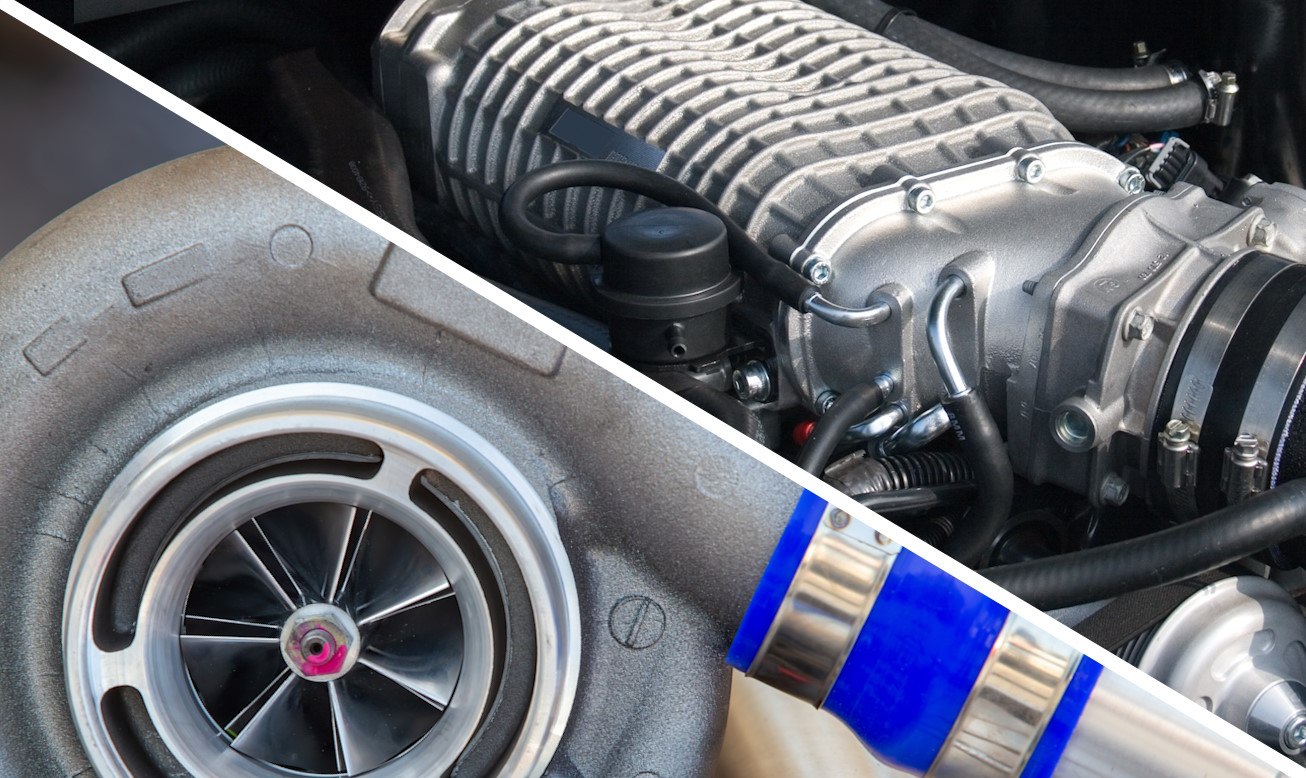
Modern performance is entirely dictated by turbochargers. In a V6 engine, you have two cylinder heads pointing away from each other. This means you have two exhaust manifolds on opposite sides of the engine, requiring complex plumbing, dual turbochargers, and massive heat shielding packed into a tight space.
An inline-six has all six cylinders in a single, straight row. This means all the exhaust ports exit out of one single side of the engine.
Engineers can bolt a massive, ultra-efficient twin-scroll turbocharger directly onto the cylinder bank. The plumbing is incredibly short, which virtually eliminates turbo lag. It also leaves the entire other side of the engine completely clean ("the cold side") to mount modern, complex emissions gear and hybrid electric motors.
Part 3: The Head-to-Head Architecture
Engineering Metric |
The Inline-Six (I6) |
The V-6 (V6) |
|---|---|---|
Natural Balance |
Perfect. Zero primary or secondary vibrations. |
Poor. Requires heavy balance shafts to run smoothly. |
Cylinder Heads |
One single head. Fewer moving parts, simpler timing chains. |
Two separate heads. Twice the cams, twice the complexity. |
Turbo Packaging |
Highly efficient. Short, direct exhaust routing. |
Complicated. Requires routing plumbing from both sides of the engine. |
Engine Bay Space |
Long and narrow. Hard to pack into small, front-wheel-drive economy platforms. |
Short and wide. Highly versatile for mass-market cars. |
The Verdict: The Victory of Soul Over Convenience
The return of the inline-six is a rare win for automotive purists. For a long time, it looked like corporate cost-cutting and the rush to electrification would make our cars completely numb. The V6 served its purpose as a compact, utilitarian appliance, but it lacked character.
The modern inline-six is a celebration of mechanical elegance. It gives modern vehicles—even heavy, high-tech SUVs and trucks—a smooth, mechanical soul that honors the great sports cars of our past like the Toyota Supra and the Nissan Skyline. It proves that sometimes, the old-school engineering way wasn't outdated—it was just waiting for the rest of the world to catch up.

COMMENTS