
The Analog Golden Age: The Cars and Culture That Built the Modern Car Community

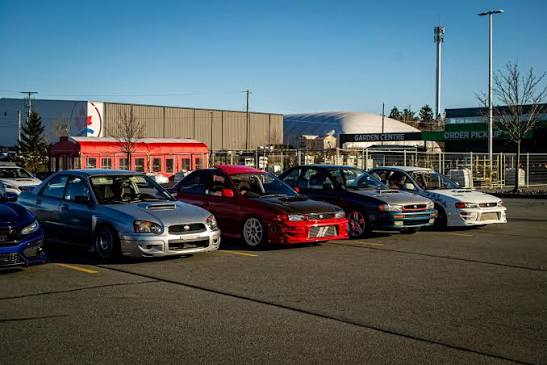
Photo: 先従隗始 · CC0 · Cropped
Before modern street takeovers, algorithm-driven car meets, and digital build threads on social media, car culture was forged in the dark. It was built in industrial parks at 2:00 AM, on grainy vBulletin internet forums, and in local garage bays where cutting your springs passed for lowering a car.
The late 1990s and early 2000s were a golden age of automotive subculture. Driven by peak mechanical reliability, affordable platforms, and a sudden explosion of pop culture representation (thanks to The Fast and the Furious in 2001), ordinary commuter cars were transformed into cultural icons.
These are the legendary vehicles, the daily rituals, the slang, and the subcultures that didn't just populate the roads—they built the modern car community.
Part 1: The Gateway Icons and Twin-Turbo Royalty
The car community of this era was anchored by an incredible influx of Japanese engineering. From entry-level hatchbacks to flagship supercars, the engineering of this generation was famously over-built and accessible.
The Gateway Icons: Honda Civic & Acura Integra
You cannot write the history of this era without starting with Honda’s golden-era double act. The Honda Civic (specifically the EG and EK generations) and the Acura Integra (DC2) were the definitive blueprints for the front-wheel-drive tuning revolution.
• Why they built the community: They were dirt cheap, incredibly reliable, and infinitely interchangeable. The magic lay in Honda’s modularity; a teenager could buy a base-model Civic hatchback, pick up a weekend shift, and swap in a high-revving B-series VTEC engine using basic hand tools.
• The Era's Vibe: This was the birthplace of the "multi-purpose" build. Legendary tuner builds proved a car could look wild enough to win a car show on Saturday, drag race at night, and drive to work on Monday.
The Twin-Turbo Royalty: Toyota Supra (MkIV) & Nissan 300ZX (Z32)
While Hondas ruled the streets by sheer volume, Japanese flagship sports cars ruled the hierarchy of "street cred". The Toyota Supra MkIV and Nissan 300ZX Twin Turbo introduced a level of factory engineering that terrified European supercars.
• Why they built the community: The legendary 2JZ-GTE engine in the Supra and the VG30DETT in the 300ZX proved that "unkillable" factory blocks could handle massive boost. Early internet forums became digital holy sites where owners figured out how to extract 600 to 1,000 horsepower without blowing up their engines. They set the standard for high-stakes, late-night highway pulls and grudge matches.
The Rally-Bred Rivals: Subaru Impreza WRX STI & Mitsubishi Lancer Evolution
Before the early 2000s, North American enthusiasts could only watch these all-wheel-drive, turbocharged monsters in video games like Gran Turismo. When the Mitsubishi Evo and Subaru WRX finally landed on Western shores in the early 2000s, they completely shifted the culture.
• Why they built the community: They brought professional rally technology to the local car meet. The community instantly split into a fierce, tribal rivalry—Subaru's rumbling EJ25 boxer engine against Mitsubishi’s razor-sharp 4G63 inline-four. Owners didn't just modify their cars; they defended their brand choice like a sports team on forums like NASIOC and EvolutionM.
The Pure Driving Textbooks: Mazda Miata (NA/NB) & Nissan 240SX (S13/S14)
Power wasn't everything. A massive faction of the 90s and 2000s community cared strictly about handling and the burgeoning art of drifting.
• The Mazda Miata: The lightweight, pop-up-headlight NA Miata taught an entire generation how to properly take a corner. It became the backbone of grassroots track days and autocross culture.
• The Nissan 240SX: With its rear-wheel-drive layout, long wheelbase, and easily swappable Japanese-spec SR20DET engines, the 240SX single-handedly birthed the Western drifting subculture. If you wanted to slide sideways in an industrial park, this was your weapon of choice.
The European Elite: BMW M3 (E36/E46) & Volkswagen Golf GTI (Mk4)
The community wasn't entirely dominated by imports from the East. European engineering offered a blend of daily drivability, smooth power, and distinct styling.
• The BMW M3: The E36 and E46 M3 models became the gold standard for aspirational performance cars. Their naturally aspirated straight-six engines offered a visceral, mechanical symphony that modern turbocharged cars struggle to replicate.
• The VW Golf GTI: The Mk4 GTI championed the "Euro-style" clean aesthetic—slammed ride heights, perfectly tucked wheels, smoothed body lines, and deep-dish wheels.
Part 2: The Physical Flex (Iconic Parts of the Era)
To look at a car built between 1995 and 2005 was to look at a highly specific language of components. The parts we bolted onto our cars were loud, proud, and beautifully analog.
• Apexi VAFC (VTEC Air Flow Converter): The absolute crown jewel of the Honda dashboard. It was a small electronic blue-screen monitor clipped to your air vent. It allowed you to manually adjust your fuel curve and change the exact RPM where your VTEC kicked in. Seeing that blue glow at night meant you were "tuning."
• Altezza Tail Lights: Originating from the factory lights on the Toyota Altezza (Lexus IS300), these clear-lens, chrome-housing tail lights became a massive aftermarket plague. People put them on everything—Civics, Mustangs, even pickup trucks.
• The "Fart Cannon" Exhaust: Usually a 4-inch unresonated chrome exhaust tip (often an Apexi N1 or a cheap replica). It turned a 1.6-liter commuter engine into a raspy, booming megaphone that could be heard three neighborhoods away.
• GReddy Turbo Timers: A tiny pen-sized box mounted on the steering column. Because old-school turbochargers needed to cool down before you shut off the engine, you would pull your key out of the ignition, step out, lock your doors, and walk into a restaurant while your car sat there running by itself for another 60 seconds. It was the ultimate "I have a turbo" flex.
• Volk TE37 & Racing Hart C5 Wheels: If you had real-deal Japanese lightweight Volk TE37s or three-piece Racing Hart C5s, you were local royalty. If you couldn't afford them, you bought Rota or Motegi replicas and prayed no one looked closely at the center caps.
Part 3: The Tribal Factions (The Sub-Genres)
The community wasn't one giant happy family; it was a collection of distinct, fiercely protective tribes. You dressed like your sub-genre, hung out with your sub-genre, and rarely crossed enemy lines.
1. The JDM Purists
• The Vibe: Heavily influenced by Japanese option magazines, Best Motoring videos, and underground racing on Tokyo's Wangan highway.
• The Cars: Honda Civic Type R clones, Nissan 240SXs, Mazda RX-7s.
• The Look: Function over fashion. They despised chrome and loud body kits. They wanted authentic, imported Japanese-market parts (JDM), amber corner lights, carbon fiber hoods, and pristine paint.
2. The Euro / VW "Clean" Scene
• The Vibe: Sophisticated, minimalist, and deeply obsessed with stance and wheel fitment before the rest of the world caught on.
• The Cars: VW Golf GTI (Mk3/Mk4), Jetta, BMW E36.
• The Look: "Slammed" on coilovers or early air suspension. They would shave off their door moldings, trunk emblems, and side markers to make the car look like a smooth, solid block of metal. They popularized "stretching" narrow tires over incredibly wide, deep-dish BBS wheels.
3. The "Show" Car Movement (The Hot Import Nights Era)
• The Vibe: Directly spawned by The Fast and the Furious and MTV's Pimp My Ride. It was loud, colorful, and wildly expensive.
• The Cars: Mitsubishi Eclipses, Honda Del Sols, Toyota Celicas.
• The Look: Wild candy paint or flip-flop "Chameleon" paint jobs, Lambo-style vertical doors, full fiberglass body kits, neon underglow, and a trunk completely filled with television screens, PlayStation 2 consoles, and neon-lit subwoofers.
4. The Grassroots Drifters
• The Vibe: Anti-establishment, raw, and slightly chaotic. They didn't care about clean paint because they knew they were going to hit a wall or a curb eventually.
• The Cars: Nissan 240SX (S13/S14), Toyota AE86 Corolla, Mazda RX-7 (FC).
• The Look: Mismatched wheels (nice wheels on the front, cheap steel wheels on the back for burning rubber), zip-tied bumpers, loud exhaust, and a driver's seat replaced with a fixed-back racing bucket.
Part 4: The Slang, The Forums, and The Rituals
To fully understand this generation, you have to look past the sheet metal and into the daily rituals and the dialect we used to judge cars and talk trash.
A Quick Translation Guide
• "Rice" / "Ricer": Short for Race Inspired Cosmetic Enhancement. It described someone who put massive wings, unpainted fiberglass body kits, and stickers on a car without doing any actual engine work. To be called a ricer on a forum was the ultimate insult.
• "Slammed" or "Tucked": Long before the modern term "stanced" took over, you were either slammed (lowered as far as humanly possible on coilovers) or you had finger gap (measuring the distance between your tire and fender by how many fingers you could jam in there).
• "Sleepers": The Holy Grail of street racing. A bone-stock looking car—maybe an unpainted Volvo wagon or a base-model Honda Accord with hubcaps—that secretly had a high-boost turbo engine under the hood.
• "All Motor": Building a car to be incredibly fast purely through engine compression, aggressive camshafts, and high RPMs—strictly without the help of a turbo, supercharger, or nitrous.
The Digital Blueprint: The Forum Era
Before you ever turned a wrench, you spent your weeknights on forums like Honda-Tech, ClubLexus, VWVortex, or Zilvia. These websites were the absolute lifeblood of the community.
The community was policed by strict, often ruthless forum moderators. If you asked a basic question without searching first, you were immediately flamed, told to use the search function, and your thread was locked with a swift "Search Before Posting." The crown jewels of these sites were the pinned "DIY" Sticky Threads. These were crowd-sourced, step-by-step masterclasses filled with blurry digital camera photos explaining exactly how to swap a clutch, wire a turbo timer, or roll your fenders.
The Saturday Rituals and Nightlife
Saturdays always started with a trip to the local auto parts store to stare at the "tuner aisle," followed by the Driveway Takeover. If one person in the crew had a flat driveway or a garage, that became the designated "Build HQ." You didn't pay shops for labor; you paid your friends in pizza and a 12-pack of soda or beer to help you drop a transmission.
The pinnacle of the week was the Friday night meet. It wasn't about standing by your car quietly. Meets happened in the back corners of Home Depot or Target parking lots at 9:00 PM. You parked with your hood popped—always—and people wandered around with flashlights checking out engine bays. The guy with the massive fiberglass subwoofer enclosure in his trunk would leave it open, blasting Eurodance, Nu-Metal (Linkin Park, Limp Bizkit), or early 2000s hip-hop (Ludacris, Lil Jon) to provide the background music for the entire lot.
If the meet got too big, the cops would inevitably roll in to clear the area. There was no chaos; someone would yell "Cops!" and everyone would calmly split up, driving to a designated "backup spot" miles away that had been agreed upon earlier on the forums. From there, the real racers headed out to abandoned industrial parks or desolate highway stretches to line up from a 40-MPH roll.
If you want to know where all of these tribes collided on a massive scale, it was Hot Import Nights (HIN). HIN was a traveling nationwide lifestyle show that took place inside dark convention centers at night. Blasting bass, strobe lights, smoke machines, and thousands of enthusiasts walking the aisles created an electric atmosphere. You’d see a pristine, track-ready JDM Integra parked right next to a Volkswagen slammed on the floor. It was the absolute mountain peak of our era's culture.
Part 5: The Culture Shock (Then vs. Now)
Cultural Element |
Then (90s / 2000s) |
Now (Modern Era) |
|---|---|---|
Meeting Grounds |
Structured web forums (vBulletin) with pinned "Sticky" threads for FAQs. |
Algorithmic Social Media (Instagram, TikTok) and temporary Facebook Groups. |
Modding Aesthetics |
Wild fiberglass body kits, neon underglow, and Altezza tail lights. |
Clean OEM+, carbon fiber accents, "wrap" culture, and function-first fitment. |
Media Consumption |
Physical magazines (Super Street, Import Tuner) and underground street racing DVDs. |
YouTube channels, digital automotive journalism, and instant video uploads. |
Street Culture |
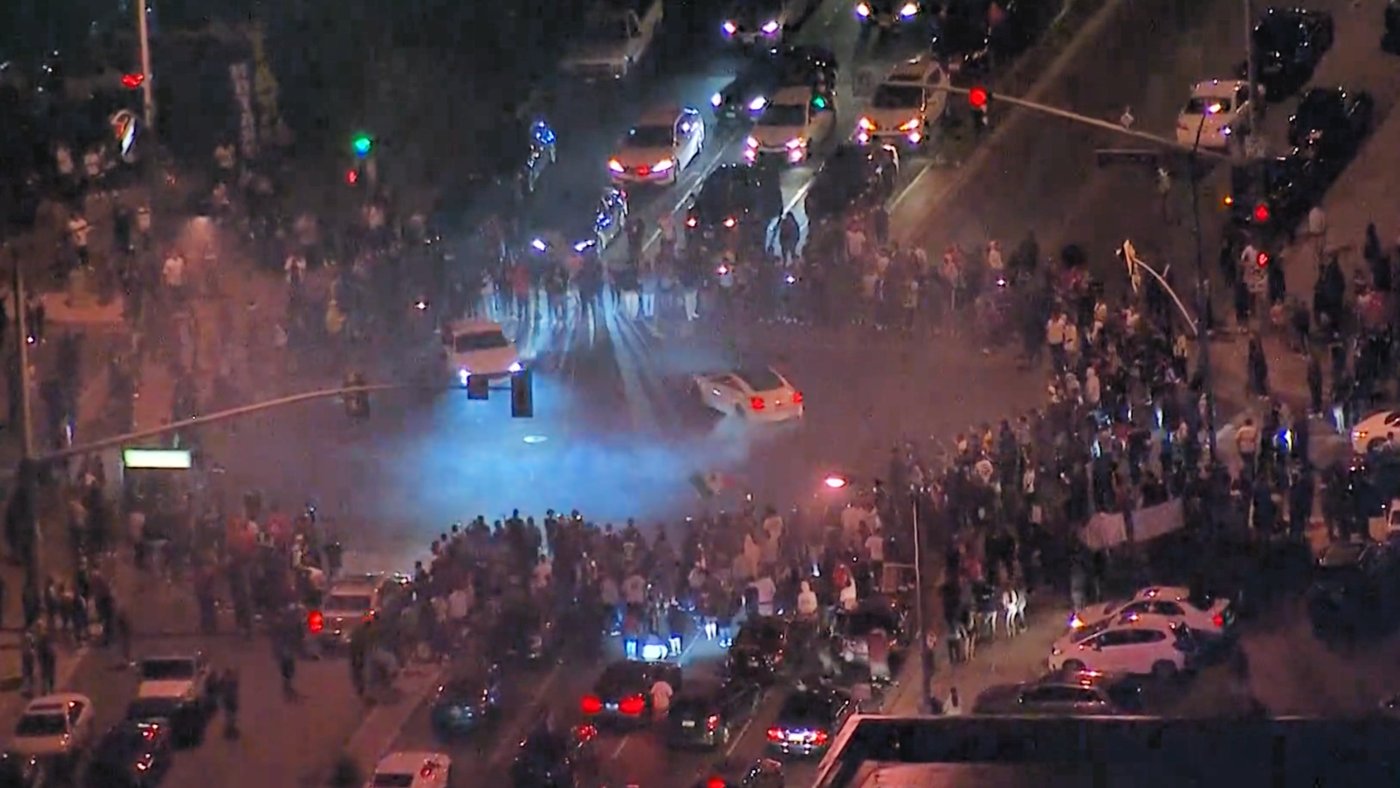
Discretion. Racers stayed hidden in dark industrial parks to avoid law enforcement. |
Exposure. Takeovers block public intersections explicitly to gain social media views. |
Conclusion: The Sundown of the Analog Era
Like any great underground movement, the golden era of the 90s and 2000s car community didn't end with a sudden crash. Instead, it slowly faded out as the world around it digitized, computerized, and grew up.
By the late 2000s, the automotive landscape underwent a massive generational shift. Factory cars started rolling off assembly lines with complex Electronic Control Units (ECUs) that couldn't be tricked by simple dashboard piggyback controllers. Electric power steering replaced the heavy, communicative hydraulic racks. Direct injection and factory turbocharging became standard, meaning anyone could make 300 horsepower right off the dealership lot with a basic software flash. The era of spending three weekends in a greasy driveway swapping a motor just to hit a 14-second quarter-mile was eclipsed by out-of-the-box factory performance.

COMMENTS