
The Blood Feud: Imports vs. Domestics and the Civil War of Car Culture

Photo: Sgt. Leejay Lockhart · Public domain · Cropped
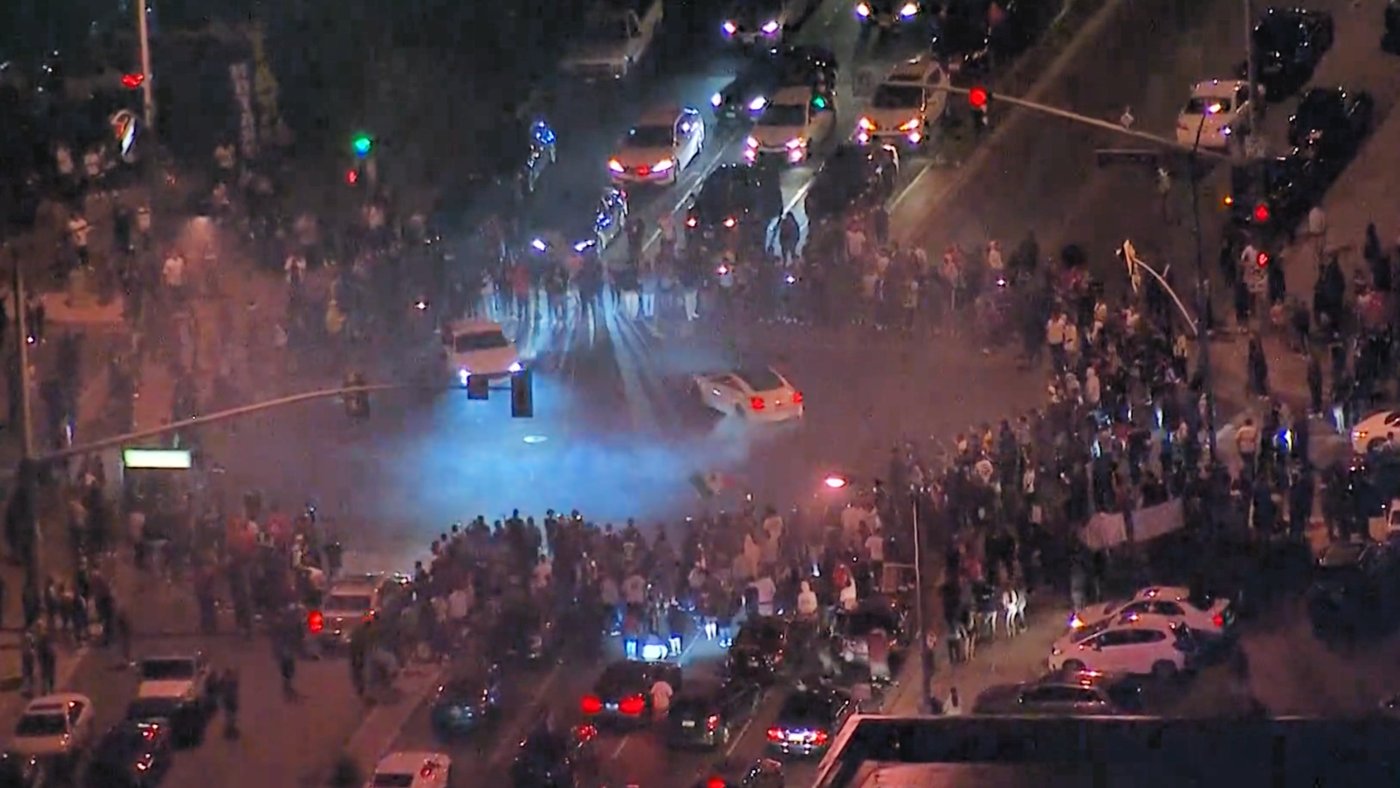
If you walked onto a desolate stretch of industrial road at 1:00 AM in the late 1990s or early 2000s, you weren’t just watching cars race. You were watching an ideological border war.
On one side of the asphalt stood the Domestic camp: wearing leather jackets, listening to classic rock or nu-metal, and smelling of unburned race gas. On the other side stood the Import camp: wearing oversized skate shoes, listening to electronic music or hip-hop, and smelling of rich fuel mixtures and cheap aerosol tire shine.
You didn't just buy a car; you pledged allegiance to a flag. If you drove a Mustang, you despised the buzzing sound of a Honda Civic. If you drove an Eclipse, you viewed the pushrod V8 as an outdated, primitive relic of the stone age. It was a cultural civil war that defined a generation of gearheads.
Part 1: The Historical Roots (How the War Began)
To understand the intensity of the friction, you have to look at the economic and cultural landscape of late-20th-century America.
For decades, American car culture was built on a singular, unshakeable dogma: "There is no replacement for displacement." The 1960s and 70s muscle car era had cemented the heavy, naturally aspirated V8 engine as the undisputed king of performance. To the old-school domestic crowd, true speed required eight cylinders, a live rear axle, and the deep, syncopated rumble of an iron engine block.
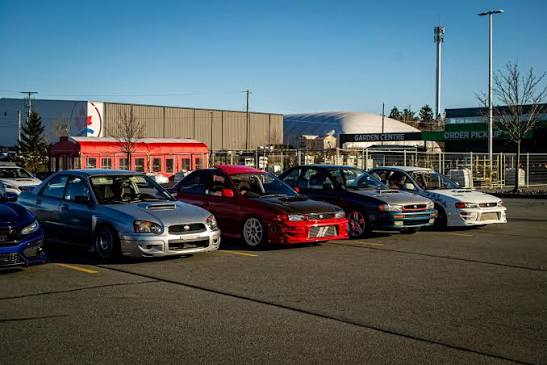
But by the 1990s, a new generation of teenagers was getting their driver's licenses. They couldn't afford the insurance or the fuel bills of a classic V8 muscle car, or they were inheriting hand-me-down Japanese commuter cars like Honda Civics, Toyota Corollas, and Mitsubishi Mirages.
Instead of accepting these cars as boring economy appliances, these kids looked under the hood and discovered a secret: Japanese manufacturers had quietly over-engineered their small-displacement engines. They featured overhead camshafts, lightweight aluminum blocks, and electronic fuel injection systems that could be easily tuned with a laptop or an early dashboard piggyback controller. The rebellion had begun.
Part 2: The Battlegrounds and the Stereotypes
The war was fought on two fronts: the digital trenches of early internet forums and the literal pavement of the streets. Each side armed themselves with specific insults, structural arguments, and stereotypes that became legendary.
The Domestic Battle Cry: "Rice Rocket" and "Fart Cannons"
The Domestic camp looked at the exploding import scene with sheer derision. They coined the term "Ricer" (Race Inspired Cosmetic Enhancement) to mock imports that featured massive, non-functional fiberglass body kits, unpainted carbon-fiber hoods, and oversized exhaust tips that sounded like a swarm of angry bees.
• The Domestic Argument: "Your car sounds like a lawnmower, it has no low-end torque, and my stock V8 Mustang will gap you while my air conditioning is blasting."
The Import Retort: "Boats," "Dinosaurs," and "Pushrods"
The Import crowd fired back by attacking the technological stagnation of American muscle. They pointed out that cars like the Mustang and Camaro were still utilizing archaic pushrod engine designs, heavy iron blocks, and ancient leaf springs or live rear axles that handled terribly in corners.
• The Import Argument: "Your car is a dinosaur. It takes five liters of engine displacement just to make 225 horsepower. My 2.0-liter engine makes more power per liter, has variable valve timing (VTEC), and can actually take a corner without flipping over."
Part 3: The Legendary Street Clashes
The peak of the Import vs. Domestic war occurred when high-dollar import builds started hunting down domestic muscle on the drag strips and street races.
The ultimate equalizer was Forced Induction and Nitrous Oxide. When the import crowd figured out they could bolt an aftermarket turbocharger onto a lightweight, front-wheel-drive platform or stuff a 75-shot of nitrous down the intake of an Acura Integra, the hierarchy broke.
Imagine the absolute shock of a veteran hot-rodder sitting in a supercharged Chevy Camaro at a stoplight, only to get completely humiliated from a 40-MPH roll by a gutted, primered Honda Civic hatchback with a massive intercooler peeking through the front bumper. These races weren't just about speed; they were personal. Fights broke out in parking lots, grudge matches were organized with thousands of dollars on the line, and early street racing DVDs like Mischief and Street Fury documented the carnage.
Part 4: The Peace Treaty (How the War Ended)
Like all great cultural wars, the lines eventually began to blur until the conflict simply dissolved into the modern landscape.
The truce was forced by the manufacturers themselves, who realized that the two sides actually wanted what the other had:
• Domestics adopted Import tech: Ford, GM, and Chrysler realized they couldn't survive on old pushrod tech. They began building high-tech, overhead-cam V8s, independent rear suspensions, and highly sophisticated turbocharged EcoBoost 4-cylinder and V6 engines.
• Imports adopted Domestic power: The import scene realized that low-end torque was king. Import builders began executing the ultimate cultural heresy: The LS-Swap. Enthusiasts started ripping the rotary engines out of Mazda RX-7s and the inline-fours out of Nissan 240SXs, dropping in lightweight, all-aluminum American Chevy LS V8 engines instead.
The Verdict: The Legacy of the Friction
The Import vs. Domestic war was loud, toxic, and often ridiculous—but it was the best thing that ever happened to the car community.
The friction drove unprecedented innovation. The domestic guys forced the import crowd to respect raw power, drag-strip hook, and low-end torque. The import guys forced the domestic camp to respect weight reduction, aerodynamic efficiency, engine software tuning, and chassis dynamics.
It proved that car culture thrives on competition. We might have listened to different music, hung out in different corners of the parking lot, and argued until our faces turned red on the forums, but we were all chasing the exact same high: the visceral thrill of taking an ordinary mass-production machine and forcing it to go faster than the factory ever intended.

COMMENTS